
There is a specific age when people stop recognizing their own reflection in a bright bathroom mirror. Not because anything dramatic happened. The face is still the face. But somewhere north of forty, the skin looks a little more tired than the person behind it feels. Flatter. Less bounce when you press it. A little slower to wake up in the morning than it used to be.
Most people blame sleep, or stress, or the summer sun. Those matter. But dermatological research points to something more specific happening underneath, and it has a name most people have never heard.
It is called GHK-Cu, a copper peptide your own body produces naturally. In 1973, a researcher named Loren Pickart first isolated it from human blood and noticed something striking: it appeared to play a central role in how skin repairs and renews itself. In the decades of study since, it has become one of the most-referenced peptides in skin science.
Here is the part the marketing usually skips. Your natural level of it does not hold steady. It falls, and it falls fast.
By the time most people reach sixty, researchers estimate their natural GHK levels have fallen by roughly 60 percent from where they sat at twenty. The decline tends to track with exactly the changes people notice in the mirror: skin that looks less firm, less even, less resilient than it once did.
So the obvious question becomes:
If the body makes less of it over time, can you simply give the skin more of it directly?
That is the idea a wave of modern serums has been built around. Apply the copper peptide topically, and support the skin's own renewal signals from the outside. The concept is not fringe. It is one of the most-studied approaches in the peptide category.
The catch is that not all of these serums are built the same, and the difference is not marketing. It is math.
Why "1% peptide complex" is not what most people think it is

Walk down the peptide aisle, physical or digital, and you will see a lot of labels that say things like "1% copper peptide complex." It sounds precise. It sounds potent. But read it carefully.
In many of the most popular budget serums, that single percentage is the combined total of several different peptides blended together, not the amount of GHK-Cu specifically. Split one percent across a handful of ingredients and the actual copper peptide content can land far lower than a shopper would ever guess from the front of the bottle.
This is not illegal, and it is not rare. It is simply how a lot of the category is packaged. But it helps explain one of the most common complaints you find buried in the reviews of otherwise well-loved products.
People are not imagining the letdown. When the active ingredient is present only in trace amounts, the honest outcome is often a pleasant-feeling lotion that does very little of what the label implied.
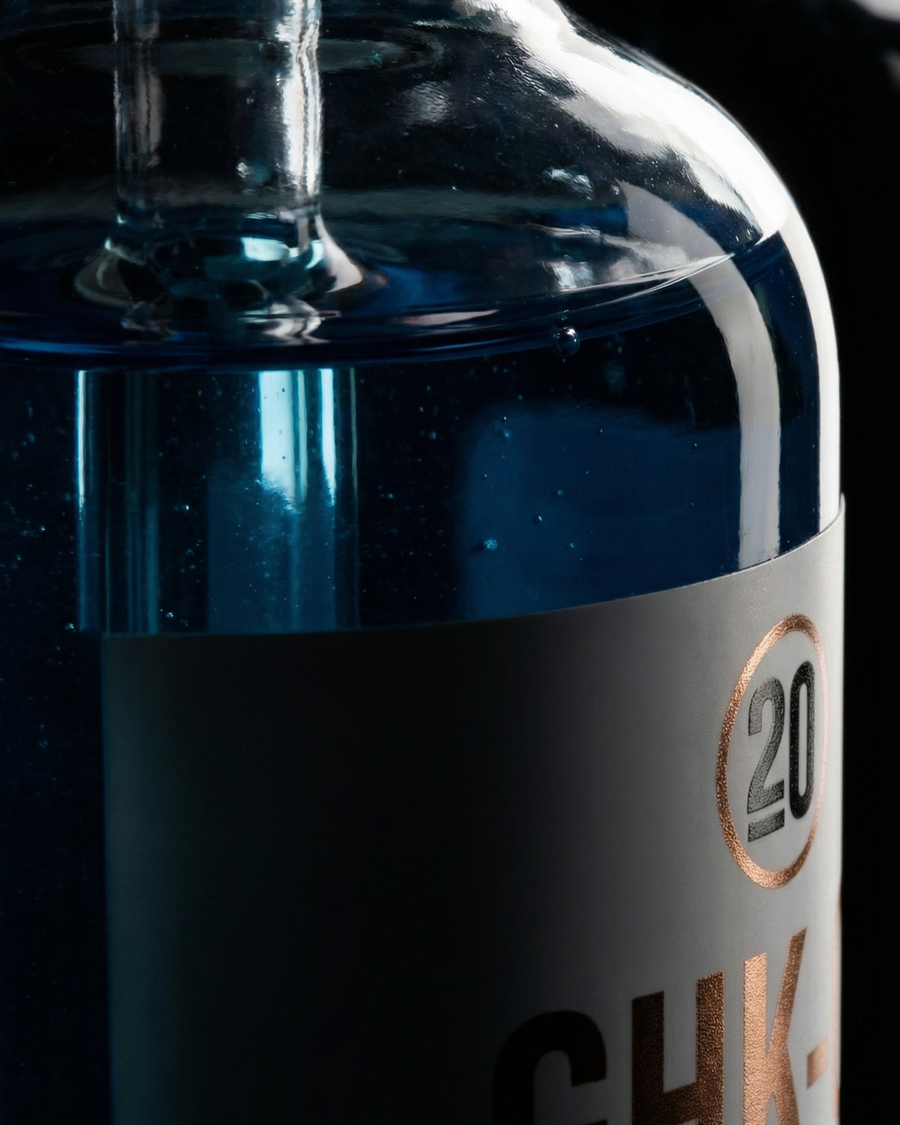
Division Twenty was built on the opposite premise. Its GHK-Cu sits at 2 percent, focused on the copper peptide itself rather than diluted across a long blend, and paired with 1.5% hyaluronic acid for hydration you can feel the same morning. The formula runs deliberately short: no added fragrance, no heavy fillers, no long chemical scroll on the back label.
The two things people notice first

Peptides are not an overnight trick, and any honest write-up should say so. The visible changes people care about tend to build over weeks of consistent morning-and-night use, not days.
But there are two things regular users tend to mention almost immediately, and neither is subtle.
The first is what it does not do. It does not reek. A surprising number of copper peptide serums carry a metallic, almost penny-like or ammonia-like smell that people quietly put up with. Reviews of competing products return to this again and again. Division Twenty's short, fragrance-free formula sidesteps that entirely.
The second is the finish. It absorbs clean. No tacky film, no rolling into little balls under a moisturizer, no sticky sheen that fights your sunscreen, which matters a great deal on a 90-degree July afternoon at a barbecue.
That phrase, look awake, comes up a lot. So does glow. So does the simpler verdict people give when something finally works: they reorder it, and they tell one friend.
How it stacks up against what you may already own

Here is a straight comparison against the profile of the typical budget peptide serum most shoppers have tried at least once.
Division Twenty vs. the typical budget serum
| Division Twenty | Typical Budget Serum | |
| GHK-Cu concentration | 2% | Often a blended fraction |
| Hyaluronic acid included | Yes | Sometimes |
| Added fragrance | None | Common |
| Ingredient list | Short | Long |
| Metallic smell | No | Frequent complaint |
| Money-back window | 90 days | Varies |
None of this requires believing in magic. It requires believing in dose, formulation, and consistency, the three things the category quietly tends to skimp on.
Why this particular week

Summer is, ironically, the season that asks the most of your skin and gives it the least mercy. Sun, chlorine, salt, heat, late nights, and a camera at every gathering over the holiday weekend. It is the stretch of the year when "looking a little tired" is most likely to end up in a photo you did not approve.
It is also, conveniently, the week Division Twenty is running its Independence Day event: 15% off sitewide with the code USA15. The single bottle is the easy way to test it. The multi-month bundles, already priced lower per bottle, are what people move to once it earns a permanent spot on the shelf.
15% off the 2% GHK-Cu Serum
American-brand copper peptide science, built on dose instead of dilution. Apply the code at checkout on any bottle or bundle.
Copper peptides were discovered half a century ago. The science is not new. What is new is a formula that leads with the actual active, skips the fragrance and filler, and asks to be judged on how your skin looks in eight weeks, not on the promises printed across the front of the box.
Over the holiday weekend, that is a low-risk experiment. And for a lot of people who thought they had already tried "the copper peptide thing," it turns out they had really only tried a diluted version of it.